How to Read Your K-Electric Bill: A Section-by-Section Guide
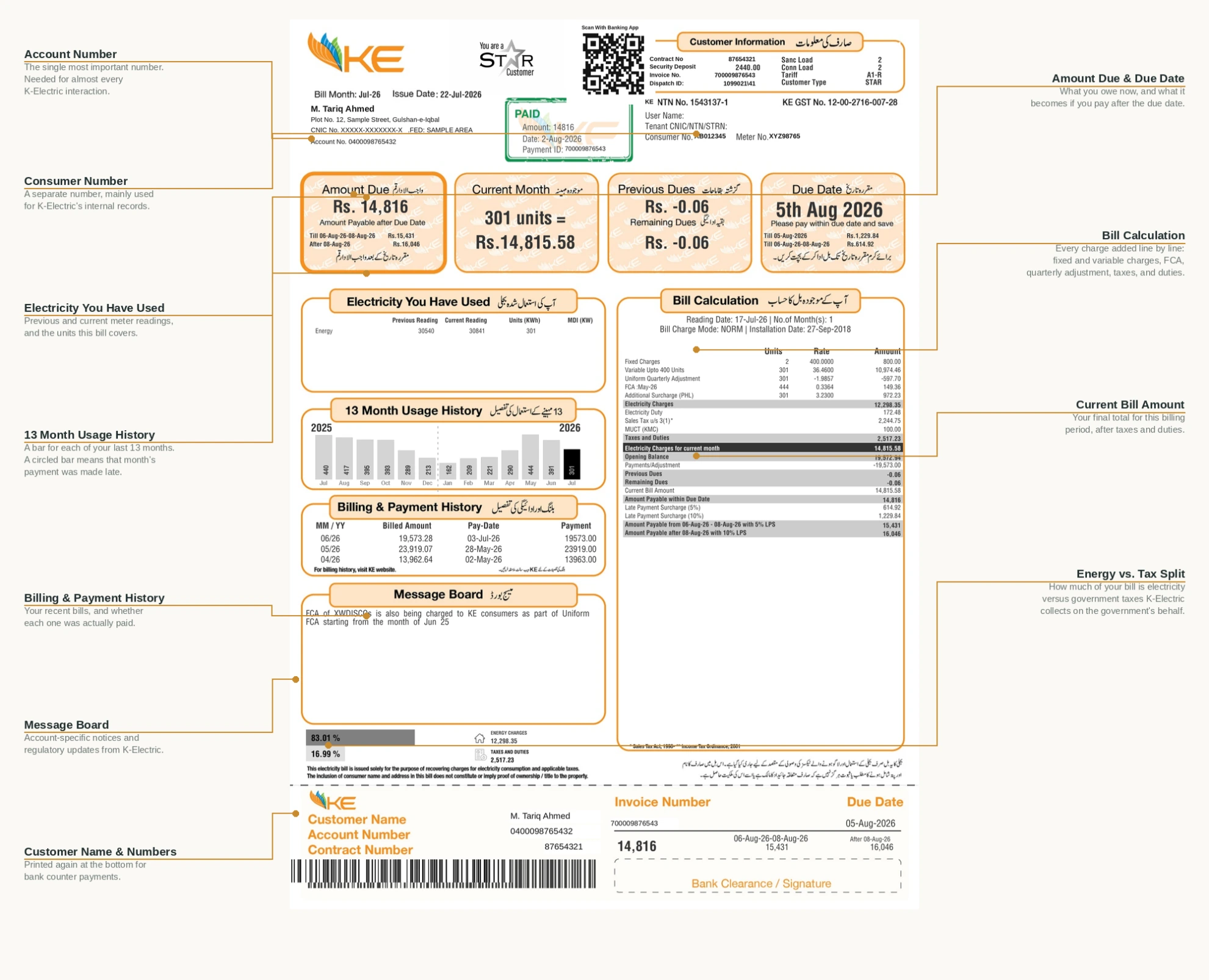
Your K-Electric bill has more information on it than most people ever look at. This guide walks through what each section actually means, using K-Electric’s own explanations of its current bill format.
Account Number vs. Contract Number vs. Consumer Number
These three numbers appear on your bill, and only one really matters for most interactions. K-Electric states the account number is the single most important reference number for customers. It’s what you need for nearly every interaction with K-Electric, from checking your duplicate bill to filing a complaint. The contract number and consumer number are mainly for internal use by K-Electric and its vendors.
Customer Type Codes
Near your customer information, you may see a short code indicating your account status. K-Electric’s own reference includes:
| K-Electric Bill Code | Meaning |
|---|---|
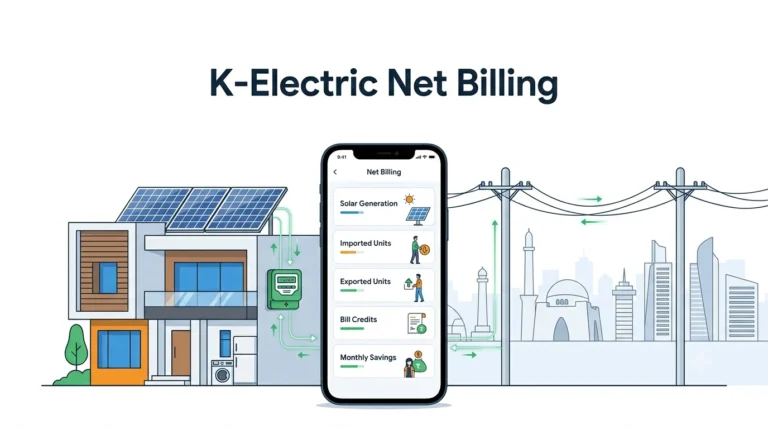
| NM | Net metering |
| PL | Payment lock |
| Def | Defaulter |
| Ltg | Legal or disputed |
| SI | Standard installment |
| Adv | Advance customer |
| DET | Theft or detection bill |
If you see a code you don’t recognize, K-Electric’s customer service can confirm exactly what it means for your account.
Amount Due and Previous Due
Your bill separates two figures clearly. The Amount Due box shows your total payable amount for the current billing period, including applicable charges. The Previous Due box shows any outstanding arrears carried forward from earlier bills, and reads zero if you have none.
Billing Charge Mode
Your bill states whether you were charged based on an actual meter reading or an estimate. K-Electric uses four Billing Charge Modes: Normal, Average, Detection, and Adjustment. This is shown near your meter number and reading date under the bill calculation section. If your bill seems unusually high, check whether you were billed on Normal (actual reading) versus Average or Detection. This can explain a lot.
The 13-Month Usage History
Most bills include a bar graph of your last 13 months of usage. A circle above a given month indicates a payment that was missed or not made by the due date. No circle means that period was paid in full and on time.
What’s on the Back of Your Bill
K-Electric consolidated several things onto the back of the bill instead of separate leaflets: details related to meter changes, net metering, payment lock status, security deposits, and irregular billing, along with a snapshot image of your actual meter. If you want to verify your bill is accurate, compare this meter snapshot against your own reading. It’s a direct way to check.
Are You a “Star Customer”?
If your bill mentions Star Customer status, that reflects consistent, on-time payment history. K-Electric states Star Customers get priority at the 118 call center. They also get access to additional rewards through the KE Live App. Continuing to pay on time and by the due date maintains this status.
Understanding the Charges on Your K-Electric Bill
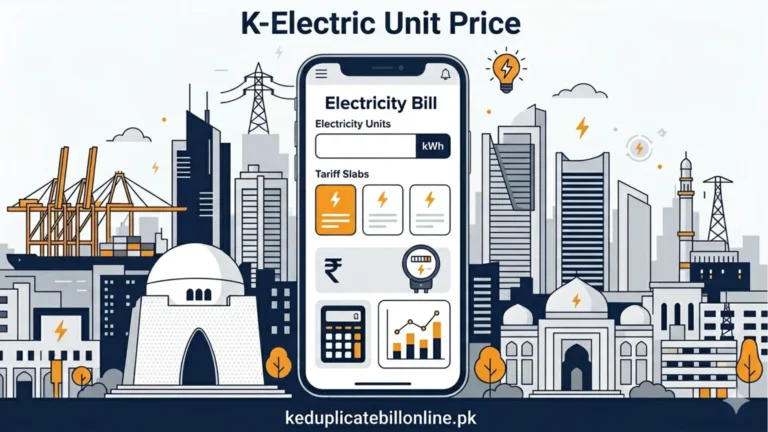
Your total bill combines several distinct charges: variable charges based on your consumption, fixed charges (which apply once residential usage exceeds 300 units in a month), FCA, QTA, and various taxes and duties that K-Electric collects on behalf of the government rather than keeping itself. For the full breakdown of tariff rates, see our k-electric per unit price in karachi. For how FCA specifically works and recent rates, see our FCA guide.
Getting Help With Your Bill
If something on your bill doesn’t make sense, K-Electric’s own channels include the KE Live App, WhatsApp, an AI assistant called Kineto, the 118 helpline, and its customer service centers. Our complaint page covers the full escalation path if a billing issue isn’t resolved through these channels.