K-Electric Bill for Shopkeepers and Small Businesses
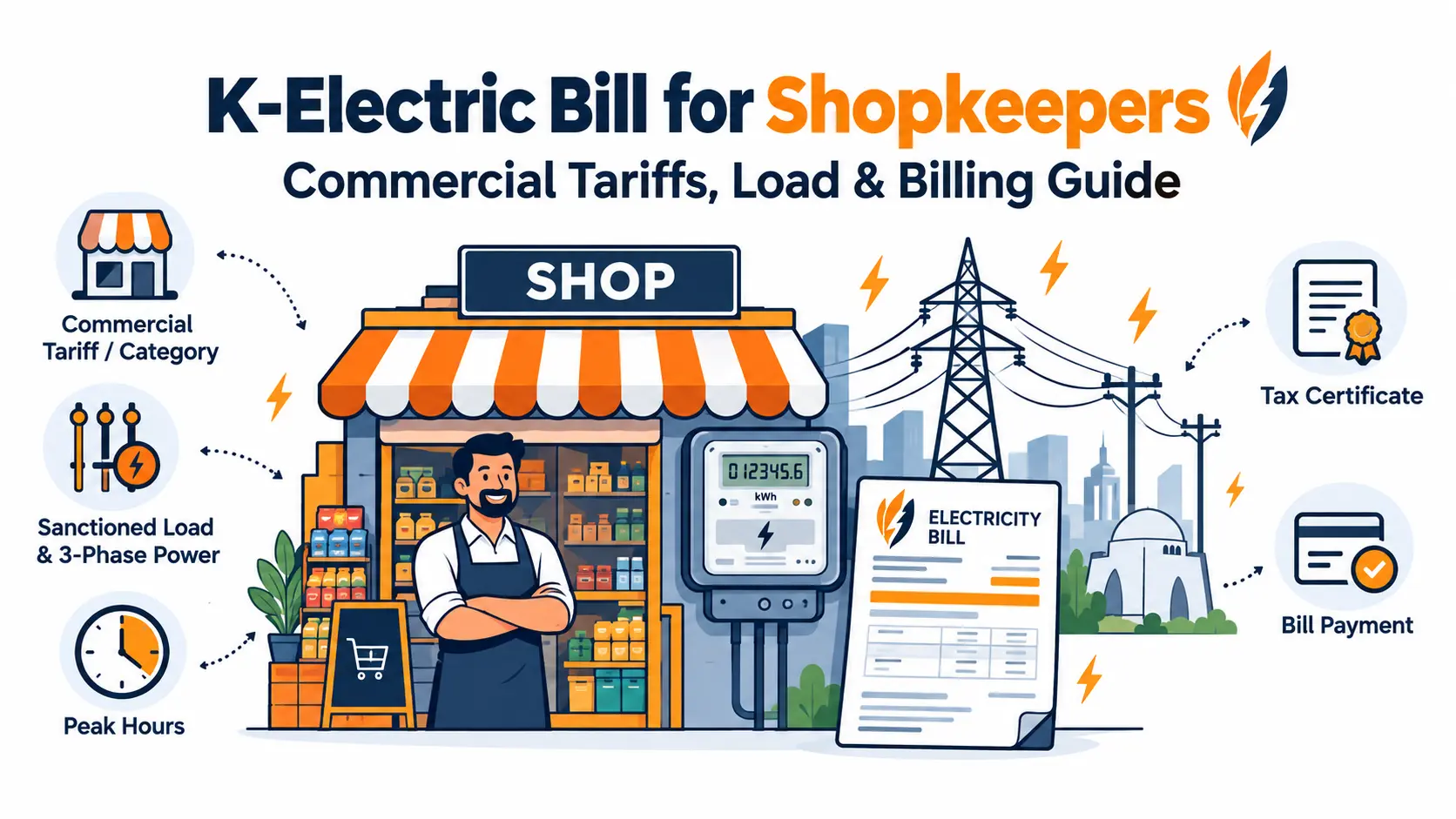
If you run a shop or small business in Karachi, your K-Electric bill for shopkeepers works differently. This guide covers what actually applies to a commercial account.
Commercial vs. Domestic: Why Your Tariff Category Matters
Commercial connections are billed under separate tariff categories from residential ones, generally without the protected-consumer discount available to low-usage households. Our K-Electric unit price guide covers how residential rates work. Commercial rates depend on your specific category and sanctioned load. Confirm your exact rate with K-Electric rather than relying on a residential figure.
Some sources report that K-Electric bills display a tariff code. Codes like D1 and D2 reportedly indicate domestic connections, while B-codes indicate commercial ones. If you believe your shop is billed under the wrong category, raise this directly with K-Electric for review. Confirm the current classification system with K-Electric, since this detail wasn’t independently verifiable from official sources.
Sanctioned Load and 3-Phase Connections
If your shop’s sanctioned load exceeds 4 kW, K-Electric’s tariff terms generally require the connection to be supplied at 3-phase rather than single-phase. This matters if you’re running equipment like refrigeration units or air conditioning. Machinery that draws more power than typical residential appliances falls into the same category. Our sanctioned load guide covers how this figure affects your fixed charges. It also covers what to do if you need it increased.
Applying for a New Commercial Connection
The process follows the same general path as any new K-Electric connection. This goes through a New Connection Front Office at a K-Electric customer center. Bring your business documentation along with the standard identity and property documents. Confirm current office hours and requirements before visiting, since these can change.
According to some sources, running your shop from a residential property may require a Change of Tariff to avoid penalties. This wasn’t independently verifiable from K-Electric’s own material. Confirm directly with K-Electric whether it applies to your specific setup before assuming either way.
Peak Hours and Your K-Electric Bill for Shopkeepers
If your shop’s sanctioned load reaches 5 kW or above, you’re billed under Time of Use rates, where peak and off-peak hours cost differently. This affects businesses more than most households. Equipment like refrigeration or heavy machinery often runs during business hours regardless of the rate. Our sanctioned load guide covers this threshold and what it means for planning equipment usage around cost.
Using Your Tax Certificate as a Commercial Customer
K-Electric issues a sales tax certificate specifically for industrial and commercial customers. This is separate from the advance income tax certificate residential accounts receive. Our K-Electric tax certificate guide covers how to request this through the KE Live App, WhatsApp, or in person.
Checking and Paying Your Bill
Checking your bill works the same way regardless of connection type. Use our KE duplicate bill checker with your account number, and our bill payment guide covers every payment channel available.